
Every July, baseball gives us one of its best traditions. The All-Star Game celebrates the sport’s brightest stars, gives fans a chance to see dream matchups, and rewards players who have put together outstanding first halves. It should be one of the easiest events in sports to enjoy.
Instead, every year, we end up having the same conversation. Who got left out?
That’s simply the nature of All-Star rosters. There are only so many spots available, and in a league filled with elite talent, deserving players are inevitably going to miss the cut. Injuries, fan voting, positional depth, and roster rules all play a role in determining who gets to Atlanta this year and who stays home. Since the initial rosters were announced, we’ve already seen several replacements added due to injuries and players declining invitations. One of those replacements, Boston’s Willson Contreras, absolutely deserved the opportunity after putting together an outstanding first half.
In fact, if Contreras hadn’t just received that call, he’d probably be leading this list. Even so, several players remain on the outside looking in (as of July 8).
Here are the four biggest All-Star snubs that stood out to me.
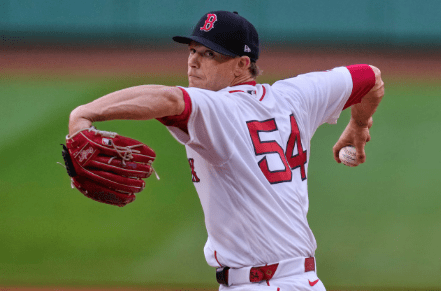
Sonny Gray – Boston Red Sox
Let’s start with the player who probably frustrates me the most.
Sonny Gray has quietly been one of the American League’s most consistent starting pitchers this season, yet he’ll spend All-Star week at home despite producing numbers worthy of a trip to Philadelphia: 10-1 with a 2.61 ERA and a 1.10 WHIP.
What’s perhaps most unfortunate is that Gray and Willson Contreras have been the two biggest bright spots on what has otherwise been a deeply disappointing Red Sox season. Boston entered the year with legitimate expectations, but inconsistency has defined much of its first half.
Gray, however, has consistently given the Red Sox a chance to win every fifth day. That’s exactly what an All-Star should do.
Pitchers often get squeezed because every league has only so many roster spots, but if the goal is to recognize the best first-half performers, it’s difficult to justify leaving Gray off the roster.
Brice Turang – Milwaukee Brewers
Brice Turang has continued to establish himself as one of baseball’s premier defensive second basemen while once again providing tremendous value at the plate and on the bases. He’s become the type of player every contender covets—a catalyst who impacts games in multiple ways even when he isn’t launching baseballs into the seats.
Ironically, Turang’s omission feels even more glaring after another second baseman dominated headlines during All-Star voting.
A few weeks ago, I wrote about Dodgers infielder Hyeseong Kim finishing fourth among National League second basemen despite spending much of the season back in Triple-A. That situation perfectly illustrated why fan voting can sometimes produce bizarre results.
Meanwhile, Turang has spent the entire season doing what All-Stars are actually supposed to do:
Performing like one. 12 homers, 54 RBIs, an .815 OPS (Top 20 in MLB) and a WAR of 3.5.
Sometimes consistency isn’t flashy enough to capture national attention. That doesn’t make it any less valuable.
Colson Montgomery – Chicago White Sox
If you’ve been reading Empire Sports Talk for any length of time, you knew this one was coming. I’ve written extensively about the remarkable turnaround taking place on the South Side of Chicago.
The White Sox have become one of baseball’s biggest surprises in 2026, and Colson Montgomery has been a major reason why.
The young shortstop has emerged as one of the offensive leaders of a club that very few people expected to be in postseason contention this year. He’s consistently delivered in big moments while helping change the culture of an organization that looked completely lost just two seasons ago.
Winning teams deserve recognition. Surprise teams deserve recognition. Players driving those surprise teams deserve recognition.
Montgomery checked every box. Instead, he’ll be watching from home.
Michael Harris II – Atlanta Braves
Michael Harris II has quietly authored one of the best comeback stories in baseball. It’s easy to forget how difficult the beginning of 2025 was for him. During the first half of last season, Harris wasn’t simply struggling.
Statistically, he was one of the least productive hitters in Major League Baseball. Then something clicked.
Over the second half of 2025, Harris rediscovered the swing that made him the National League Rookie of the Year back in 2022. Instead of letting that resurgence fade, he carried it directly into 2026 and has looked like the dynamic five-tool player Braves fans fell in love with several years ago.
The defense remains elite. The athleticism remains electric. And now the offense has returned to match it.
Sometimes All-Star voting tends to lag behind reality. Players can get stuck carrying outdated narratives long after they’ve turned things around. Honestly, Harris II might have been a victim of volume in the 2026 voting process. Five of his Atlanta teammates were voted to the Midsummer Classic. Even though he’s deserving, he could’ve been kept out simply because he would be number six.
Either one of those feels like what could’ve happened here. The Michael Harris we’re watching today looks much more like the Rookie of the Year than the player who struggled early last season.
.308 AVG (8th MLB), 16 HRs 53 RBIs. 96 hits in 90 games.
That’s an All-Star.
Jose Soriano – Los Angeles Angels
This one probably bothers me the most. I know Jose Soriano hasn’t been as strong as of late as he was at the start of the year, but his first couple months alone deserve to be bulletin board material for this event.
He was the best pitcher in baseball through the month of April. He allowed just 4 earned runs the entire month. He began May with an ERA of 0.84. Yes, he had an ERA above 5.00 in May and June, but his overall ERA didn’t eclipse 3.00 until halfway through June.
In a perfect world, would I be advocating for Soriano’s All-Star resume, probably not. But the world is not perfect. This world is one where each team is required to have a representative. For the Angels this year, that is Mike Trout. I LOVE Mike Trout, but it seems that he was selected simply because he is Mike Trout – and that’s my problem with modern All-Star voting. Mike Trout has already missed 18 games and only has a .234 average with 36 RBIs. Outside of his 17 home runs, that’s hardly All-Star worthy.
If one of the worst teams in baseball HAS to have an All-Star representative in 2026, it should be the guy who for a good portion of the season’s first half, was the American League’s best pitcher. Again, under normal, merit-based circumstances, would I be advocating for either of these resumes, no. But based on MLB’s current requirements, the Angels’ representative should be Jose Soriano, not Mike Trout.
The Reality of All-Star Rosters
The unfortunate reality is that every All-Star roster creates deserving snubs.
Some players benefit from playing in larger markets. Others lose out because their position happens to be loaded with talent. Pitchers get squeezed by roster limits. Position players get squeezed by fan voting.
That’s baseball.
And with injuries inevitably occurring over the next several days, there’s still a chance one—or even several—of these players could receive a late call to Atlanta as replacement selections.
I certainly wouldn’t be surprised.
Of course, I’m sure I snubbed a few players in my own list of All-Star snubs.
Every fan has a name they believe deserved better, and that’s part of what makes this conversation so much fun every July. These four, however, stood out to me more than anyone else.
Whether they ultimately make the trip as replacements or not, one thing seems clear:
Their first halves deserved far more recognition than they received.


Leave a Reply