
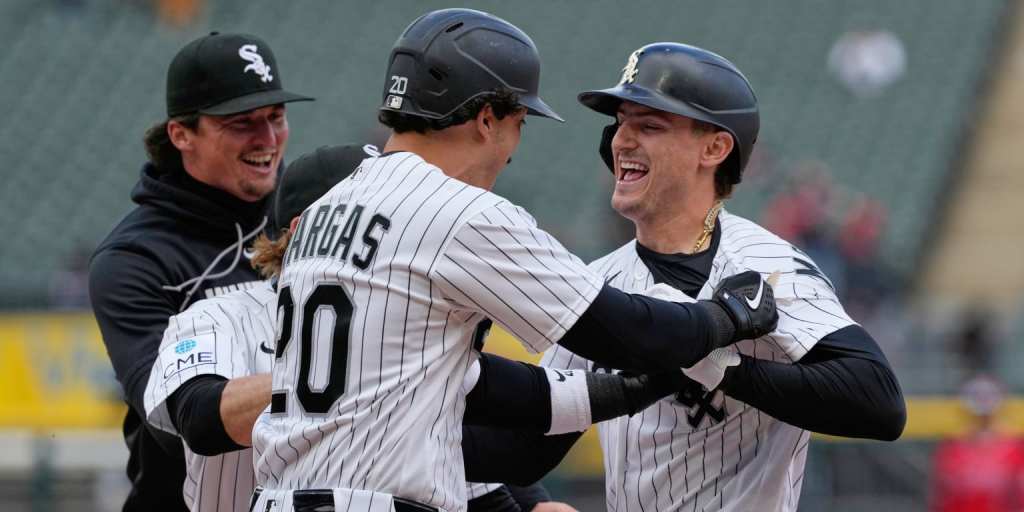
How are the Chicago White Sox doing this?! Just a couple seasons removed from posting the worst statistical record in MLB history, the 2026 version of the Southsiders have become one of the best stories in all of baseball.
Going into play on June 9th, the White Sox sit at 34-31. They’re just a game and a half behind the Cleveland Guardians in the AL Central and currently hold the second American League Wild Card spot. Read that sentence again.
This is a franchise that lost 121 games in 2024.
Not 101. Not 111. One hundred and twenty-one. They went 40-121. Statistically, the worst record in the history of Major League Baseball in terms of win percentage.
At the time, the organization looked completely directionless. The roster lacked star power, the farm system was still developing, and there was very little reason to believe a turnaround would happen quickly. Most rebuilding clubs spend years wandering through the baseball wilderness before they become competitive again.
The White Sox apparently skipped a few steps.
What’s most impressive about Chicago’s resurgence isn’t just that they’re winning games. It’s how they’re winning them.
This isn’t a team built on expensive free agents or blockbuster trades. This isn’t a club that suddenly added a handful of superstars and bought its way back into contention. The White Sox have built this turnaround the old-fashioned way: culture, chemistry, player development, and trusting their young talent.
That’s becoming increasingly rare in modern professional sports.
When we release our midseason MLB awards and predictions in the coming weeks, White Sox manager Will Venable is going to be very difficult to overlook for American League Manager of the Year.
Frankly, at this moment, he feels like the favorite.
The White Sox entered the season as the youngest roster in baseball. Expectations were virtually nonexistent. Most projections had them finishing near the bottom of the division again while continuing to develop their prospects. Instead, Venable has somehow managed to create an environment where young players are not only developing but thriving while the team competes for a playoff spot.
That’s not easy to do.
Young teams usually lose games they shouldn’t. They make mistakes. They struggle with consistency. They press under pressure. Chicago has certainly had some of those moments, but they’ve largely played with a confidence and maturity that belies their age.
A huge part of that success starts with the addition of Munetaka Murakami.
When the White Sox signed the Japanese slugger, there was optimism that his power would eventually translate to the Major League level. What nobody could have fully anticipated was how much energy he would inject into the organization. Murakami has quickly become one of the faces of this new era of White Sox baseball, providing the lineup with legitimate power while helping establish a new identity for the club.
Around him, several young players have taken massive steps forward.
Colson Montgomery looks increasingly comfortable at the Major League level and is beginning to resemble the franchise cornerstone many scouts envisioned when he was climbing prospect rankings. Miguel Vargas has become a key offensive contributor, while Chase Meidroth has been one of the most pleasant surprises on the roster. The White Sox front office believed both players could be important pieces moving forward. Thus far, they’ve been proven right.
And then there’s the pitching.
Every surprise contender needs a few breakout performances, and Davis Martin may be authoring one of the best stories in baseball.
Martin currently owns the fourth-best ERA in the American League and is rapidly transforming from intriguing young arm into legitimate frontline starter. Every rebuilding team hopes a pitcher unexpectedly takes that leap. Very few actually get to watch it happen in real time.
The White Sox are.
Sean Burke deserves plenty of credit as well. While Martin has grabbed headlines, Burke has quietly become a reliable staple of the rotation. His emergence has helped stabilize a pitching staff that many expected to struggle through growing pains this season.
Instead, Chicago’s rotation has become one of the driving forces behind its success.
The remarkable thing about all of this is that there doesn’t appear to be a fluke hiding beneath the surface.
Yes, there will be challenges. Young teams often face adversity as the season wears on. Opposing clubs will adjust. Injuries will happen. The pressure of meaningful baseball games in August and September is unlike anything many of these players have experienced.
But the foundation feels real.
The White Sox aren’t winning because one player is carrying them. They’re winning because multiple young players are developing simultaneously. They’re winning because their pitching has exceeded expectations. They’re winning because their manager has created a culture that allows young talent to flourish.
Most importantly, they’re winning because the organization trusted its process.
In an era where fans often demand immediate results and front offices feel pressure to make splashy moves, the White Sox chose patience. They trusted their prospects. They trusted their player development system. They trusted that better days were ahead.
Eighteen months ago, they were coming off the worst season baseball has ever seen. Today, they’re holding a playoff spot.
There is no way of knowing exactly how good this White Sox team can become. Maybe they’re ahead of schedule. Maybe they’re a year away from being a legitimate contender. Maybe this is the beginning of a sustained run in the American League Central.
What we do know is that one of the most remarkable turnarounds in recent baseball memory is unfolding on the South Side of Chicago. And if the White Sox keep playing the way they have through the season’s first two months, they won’t just be one of the best stories in baseball.
They’ll become one of its most dangerous teams.
 Empire Sports Talk
Leave a comment