
Baseball fans don’t like talking about labor negotiations. Honestly, I don’t blame them.
When we’re in the middle of a season, the last thing most people want to think about is collective bargaining agreements, revenue sharing, or economic proposals being exchanged between billionaires and millionaires. We want to talk about pennant races, prospects, trade deadlines and whether our team has a chance to make October interesting.
Unfortunately, the future of the sport often gets decided in boardrooms long before it gets decided on the field.
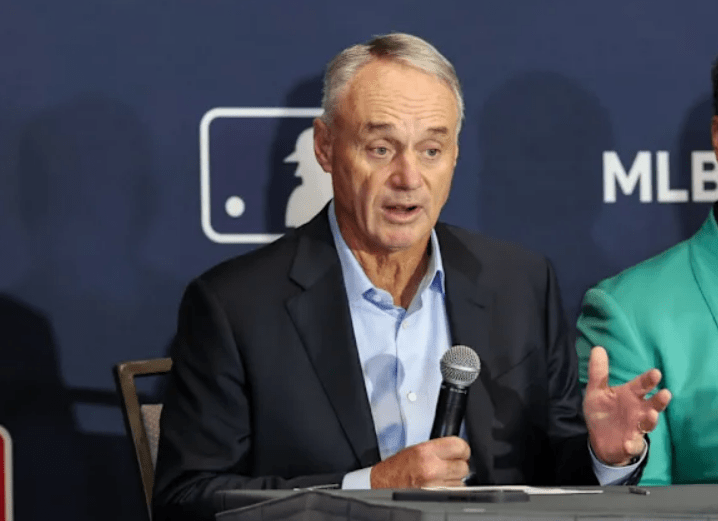
Over the last week, Major League Baseball and the MLB Players Association exchanged their opening economic proposals for the next Collective Bargaining Agreement, which expires following the 2026 season. While we’re still more than a year away from any potential labor stoppage, the early signs aren’t exactly encouraging.
The reason is simple: both sides seem to agree that baseball’s economic system needs adjustments, but they fundamentally disagree on how to get there.
The MLBPA submitted a proposal centered around increasing player compensation, expanding the pre-arbitration bonus pool, increasing minimum salaries, and modifying revenue sharing. None of that was particularly surprising. The players have long argued that younger players deserve a larger share of baseball’s growing revenues and that some organizations are receiving revenue-sharing money without making a serious effort to improve their major league product.
Then MLB responded. And, frankly, they wasted no time bringing the biggest issue in baseball labor negotiations back to the table.
The owners formally proposed a salary cap system. If that sentence sounds familiar, it’s because this has been baseball’s labor battlefield for decades.
Unlike the NFL, NBA, and NHL, Major League Baseball remains the only major North American professional sports league without a salary cap. Ownership has long argued that the absence of one creates competitive imbalances between the highest-spending and lowest-spending teams. The league’s proposal reportedly includes both a salary cap and a salary floor, along with expanded revenue sharing and a 50-50 split of certain baseball revenues between players and owners.
Predictably, the MLBPA didn’t exactly greet the proposal with open arms.
The union immediately pushed back, arguing that salary caps have historically existed to suppress player salaries rather than improve competitive balance. They also pointed to baseball’s history, including the 1994 strike that wiped out the World Series, as evidence of how divisive the issue has always been.
And that’s where this conversation becomes uncomfortable. Because both sides are making points that aren’t entirely wrong.
Owners can point to the Dodgers, Mets, Yankees and a handful of other organizations spending at levels that many clubs simply can’t match. Players can point to teams receiving revenue-sharing dollars while carrying payrolls that make fans wonder whether ownership is even attempting to compete.
The problem isn’t that one side is obviously right and the other is obviously wrong.
The problem is that their solutions are completely different.
Personally, I know this is where I may differ from some baseball traditionalists, but I don’t hate the idea of a salary cap and floor. In fact, if the two are tied together, I think there could be real benefits.
That said, the floor matters far more to me than the cap.
For years, we’ve watched certain organizations operate with payrolls that make it difficult to take their commitment to winning seriously. Not every small-market team behaves this way. Tampa Bay consistently wins. Milwaukee finds ways to compete. Cleveland seems to develop quality players in its sleep.
But there are other organizations that seem content to sit on the sidelines every winter while fans are told to be patient.
Colorado immediately comes to mind. Pittsburgh has drawn similar criticism over the years, although they finally took a step in the right direction this past offseason. If a meaningful salary floor forced those clubs to invest more aggressively in free agency and roster construction, that would be good for baseball. Fans in every market deserve to feel like ownership is actually trying.
There’s another issue I’d personally like to see addressed, although it doesn’t appear to be a major focus of the current negotiations.
Contract deferments.
To be clear, this is my opinion, not something currently driving the talks. But I do think baseball eventually needs to have a conversation about how much money can be pushed into the future.
The Dodgers have become the face of this debate, largely because they’ve mastered the art of using deferments to create financial flexibility. What they’ve done is perfectly legal, and frankly, smart. If the rules allow it, teams would be foolish not to take advantage.
But at some point, I think the sport needs guardrails.
Personally, I wouldn’t allow more than 40 percent of a contract to be deferred over the life of a deal. Maybe that’s too restrictive. Maybe it’s not enough. Either way, as long as teams can defer enormous portions of superstar contracts (like $680 of Shohei’s $700 million contract), it becomes increasingly difficult to have honest conversations about competitive balance. Whether that issue ever becomes part of these negotiations remains to be seen, but it’s something I’d like to see baseball address eventually.
As for the negotiations themselves, it’s important to remember that we’re still in the very early stages of the process. Neither side was expected to arrive at the table and immediately start agreeing on everything. Opening proposals are often designed to establish positions rather than finalize solutions.
Still, it’s impossible to ignore the significance of a salary cap proposal appearing this early. When the words “salary cap” enter baseball labor discussions, history tells us things can get ugly quickly.
The optimistic view is that both sides have plenty of time. The current CBA doesn’t expire until after next season. There’s room for compromise, room for negotiation, and room for creative solutions that neither side has publicly discussed yet.
The pessimistic view is that baseball’s biggest labor fight has already revealed itself, and neither side appears interested in backing down.
Hopefully cooler heads prevail.
The sport is in a healthy place right now. Attendance is improving. This is the best crop of rookie players in recent memory. The pitch clock has revitalized pace of play, and the ABS system is a hit. For the first time in a while, baseball feels like it has momentum.
The last thing anyone wants is another labor dispute stealing headlines from the game itself.
So I’ll throw the question to you:
Would you support a salary cap in Major League Baseball? Would you support a salary floor? Or do you believe baseball should continue operating without either?
Because whether we like it or not, the answers to those questions may end up shaping the future of the sport for the next decade.
 Empire Sports Talk
Leave a comment