
Just a couple of days ago, I wrote an article discussing Adam Silver’s comments that the NBA had developed a solution to its growing tanking problem but was intentionally waiting until after the playoffs to reveal it. In that article, I revisited an admittedly aggressive proposal I had made earlier this year: if a team was found guilty of intentionally tanking, it should lose the first-round pick it was trying to lose for.
As I said at the time, I never expected the NBA to actually adopt something that severe. It was more of a thought exercise than a realistic prediction. Still, the underlying point remains the same: if the league wants to discourage tanking, it has to attack the incentives that make tanking attractive in the first place.
Now we know what Adam Silver was talking about.
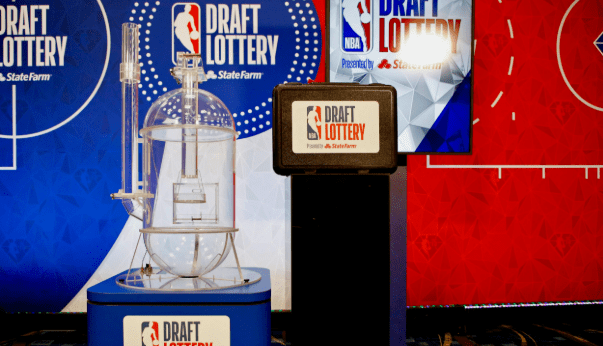
The NBA has officially announced a new anti-tanking initiative known as the “3-2-1 Draft Lottery System,” a significant overhaul of how lottery odds will be distributed beginning with the 2027 NBA Draft.
The goal is simple: make losing less rewarding.
For years, the league has tried to discourage teams from bottoming out by flattening lottery odds. While those changes helped, they didn’t eliminate the problem. Every season, fans still watch teams shut down healthy players, extend minor injury recoveries, and suddenly become much more interested in draft position than wins and losses.
The NBA clearly believes it can do better.
Under the new system, the lottery field expands from 14 teams to 16 teams, bringing Play-In Tournament teams into the lottery equation. The most notable change, however, is how the lottery balls are distributed.
Rather than heavily rewarding the teams with the worst records, the league is spreading opportunity more evenly across the bottom half of the standings. Teams finishing in the middle of the lottery standings will actually receive more lottery balls than the league’s three worst teams. The philosophy behind the change is obvious: if finishing with the worst record no longer provides a significant advantage, organizations have far less reason to intentionally lose games.
The impact of the change becomes even clearer when comparing the old odds to the new ones.
Under the previous system, the team with the worst record had a 14% chance of landing the No. 1 overall pick, a 40.1% chance of selecting in the Top 3, and a guaranteed Top 5 selection.
Under the new system, those odds take a dramatic hit. The worst team now has only a 5.4% chance at the No. 1 pick and just a 16.4% chance of landing inside the Top 3. Perhaps most importantly, there is now a staggering 71% chance that the league’s worst team will pick somewhere between sixth and twelfth.
Think about that for a moment.
A franchise could spend an entire season losing and still have better than a two-thirds chance of missing out on a Top 5 pick entirely.
That is a dramatic shift in philosophy.
The NBA is also introducing restrictions designed to prevent franchises from stockpiling premium draft capital over multiple seasons. Teams can no longer draft first overall in consecutive years, nor can they select inside the Top 5 in three consecutive drafts.
In other words, the league is targeting the multi-year rebuild strategy that has become common around the NBA. Organizations can still rebuild, but they won’t be able to rely on an endless stream of top-tier lottery selections to do it.
Not surprisingly, the plan has already drawn criticism.
Some fans argue that struggling franchises need access to elite talent in order to become competitive and that these changes could make it harder for truly bad teams to improve. Others believe that flattening the odds even further increases randomness and could potentially reward teams that are merely mediocre rather than genuinely rebuilding.
Those concerns are fair. No draft lottery system will ever be perfect because the league is attempting to balance two competing goals: helping bad teams improve while discouraging them from intentionally staying bad. That’s a difficult needle to thread.
What I appreciate about this proposal, however, is that the NBA isn’t pretending to have all the answers. Rather than locking itself into a permanent solution, the league is treating the 3-2-1 Lottery System as a three-year experiment covering the 2027, 2028, and 2029 NBA Drafts. Before the 2030 Draft, owners will have the opportunity to either renew the system, modify it, or move in an entirely different direction.
To me, that is one of the most encouraging parts of the announcement. It shows that Adam Silver is serious about combating tanking, but it also shows that the league is willing to remain flexible. The NBA is essentially admitting that this is an experiment. They’ll gather data, evaluate results, listen to criticism, and make adjustments if necessary.
Frankly, that’s how major rule changes should be handled. Will this eliminate tanking completely? Probably not.
As long as transformational prospects like Victor Wembanyama, Cooper Flagg, or future franchise-changing stars exist, there will always be organizations tempted to prioritize draft position. But this new system significantly reduces the reward for doing so, and that’s ultimately what matters.
My admittedly aggressive proposal from earlier was never going to happen. The NBA was never going to start confiscating first-round picks from teams it believed were tanking. But the league has arrived at the same destination through a much more realistic path: making losing less valuable than it used to be.
Is the new 3-2-1 Draft Lottery System perfect? No. Is it a step in the right direction? Absolutely.
And for the first time in years, it feels like the NBA is treating tanking as a problem that deserves more than a slap-on-the-wrist fine and a sternly worded memo.
 Empire Sports Talk
Leave a comment