
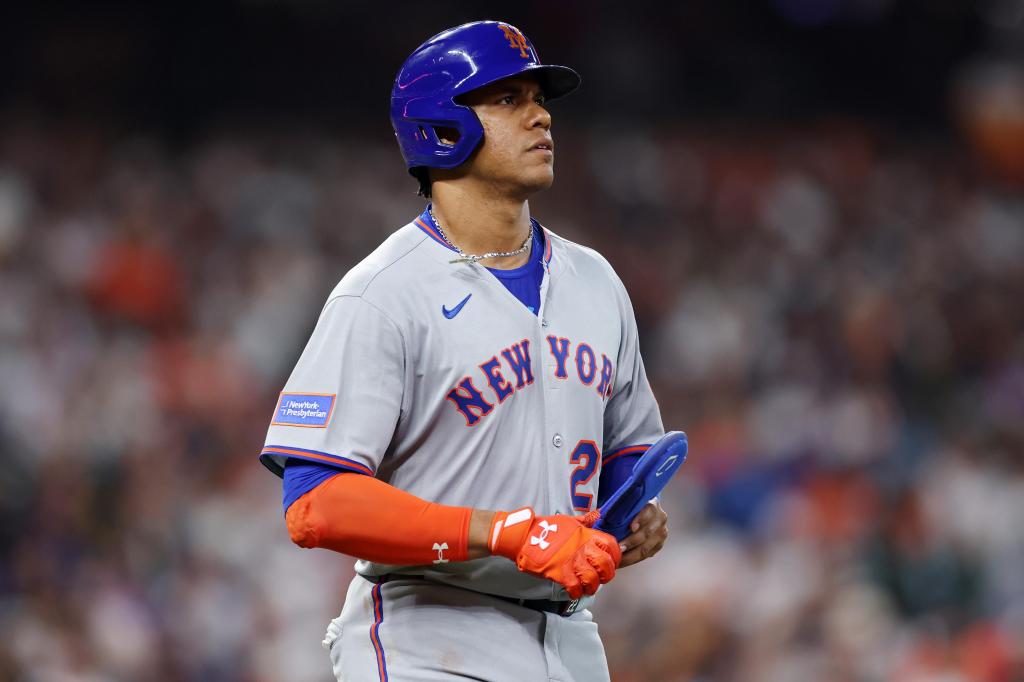
There are expensive disappointments in sports, and then there is what could be happening in Queens.
The New York Mets enter the final week of the 2026 regular season with six games remaining and a very real possibility of finishing at the bottom of the National League East. If that happens, the Mets would reportedly become the first professional sports franchise ever to spend more than $300 million on its roster and finish in last place.
Read that again.
More than $300 million. Last place.
For an organization owned by Steve Cohen, a man who has never been shy about opening his checkbook in pursuit of a championship, it would be an almost unbelievable distinction. The Mets have operated with the financial freedom most franchises can only dream about. They’ve chased stars, handed out enormous contracts and routinely demonstrated a willingness to spend their way out of problems.
And yet, here they are.
The lesson should be painfully obvious by now: money can buy players. It can’t buy a team.
Steve Cohen Has Never Been Afraid to Spend
I’ll give Cohen credit for one thing from the start: the man wants to win.
When Cohen purchased the Mets, he didn’t arrive preaching patience while cutting payroll and asking fans to wait through a five-year rebuild. He arrived with ambition. He has been willing to spend at a level rarely seen in baseball, and when the Mets have identified a star they believe can help them win, money hasn’t usually been the obstacle.
That’s exactly what fans should want from a billionaire owner.
The problem isn’t that Cohen spends too much. The problem is the Mets have repeatedly behaved as though spending is the same thing as building.
Those aren’t interchangeable concepts.
According to 2026 payroll estimates, New York once again sits at or near the very top of Major League Baseball’s spending hierarchy. The roster has plenty of recognizable names and expensive contracts, but the standings don’t care how much money is deposited into players’ bank accounts.
The Mets’ 2026 season has been such a disappointment that manager Carlos Mendoza was fired during the summer, and questions have continued to surround president of baseball operations David Stearns even as reports indicate Cohen intends to keep him.
At some point, this stops being a question of whether the Mets have enough talent. It becomes a question of whether they’ve actually built the right team.
Chemistry Matters
This is the part of roster construction that can’t be plugged into a spreadsheet.
Leadership matters. Clubhouse chemistry matters. Coaching matters. Finding players who complement each other matters. Developing talent matters. Having 26 guys who understand their roles and pull in the same direction matters.
You obviously need talent to win a championship, and money can make acquiring that talent significantly easier. Recent history actually demonstrates that spending and winning aren’t mutually exclusive; eight of the last 10 World Series champions ranked inside the top 10 in tax payroll.
But there’s an enormous difference between saying money helps you win and saying money creates winning. It doesn’t.
If it did, we could have skipped the 2026 season and handed the Mets a postseason berth in March.
Instead, New York has spent much of the season buried in the NL East, and the final week could deliver the ultimate indignity. They’re not fighting the Atlanta Braves for the division. They’re not jockeying with the Philadelphia Phillies for Wild Card positioning. They’re fighting to avoid the basement.
That is an astonishing return on investment.
Then Look at Cleveland, Chicago and Tampa Bay
The contrast becomes even more glaring when you look around baseball.
The Cleveland Guardians, Chicago White Sox and Tampa Bay Rays operate with three of the five lowest payrolls in Major League Baseball, yet all three have positioned themselves for postseason baseball. Cleveland and Chicago have spent September battling atop the AL Central, while Tampa Bay has arguably been the best team in baseball all season long.
Those organizations don’t have Cohen’s financial resources. What they have are systems.
Tampa Bay has practically made an organizational identity out of squeezing production from players other teams overlook. Cleveland has consistently developed pitching and found ways to remain competitive without chasing the biggest names on the free-agent market. Chicago’s emergence has been one of the most interesting developments of the 2026 season, with players such as Miguel Vargas blossoming into legitimate stars while helping push the White Sox toward their first postseason appearance in five years.
That doesn’t mean cheap automatically equals smart any more than expensive automatically equals good. Owners shouldn’t look at those teams and use their success as an excuse to pocket revenue instead of investing it back into the roster.
That’s not the point. The point is that payroll should supplement good team-building, not replace it.
Give a smart organization $300 million and you’ve created a monster. Give a dysfunctional organization $300 million and you’ve simply created a very expensive dysfunctional organization.
Right now, the Mets are looking dangerously close to the latter.
We’ve Seen This Movie Before
That’s what makes 2026 especially frustrating for Mets fans. This isn’t the first time Cohen’s Mets have demonstrated that collecting stars doesn’t necessarily produce a cohesive baseball team.
We’ve seen the enormous payrolls. We’ve seen the splashy acquisitions. We’ve seen the expectations skyrocket during the offseason, only for the actual baseball to fall short of the names printed on the lineup card.
At some point, the organizational philosophy has to evolve.
You can’t simply look at the best available player, write the biggest check and assume everything else will sort itself out. Sometimes the best roster move isn’t acquiring the biggest name. Sometimes it’s finding the right No. 7 hitter, the right middle reliever, the right utility player or the right veteran who holds a clubhouse together when a team loses seven of nine.
Championship teams almost always have those guys.
They also have players developed from within who establish an organizational identity. They have coaches who maximize talent rather than merely manage it. They have stars willing to sacrifice individual numbers or preferred roles because that’s what the team needs.
You can’t put a price tag on that.
The Mets Could Make the Wrong Lesson Out of This
Here’s where I want to be careful, because the lesson from this season should not be that Steve Cohen needs to stop spending.
Absolutely not.
If I were a Mets fan, the last thing I’d want is for ownership to look at 2026 and decide the solution is slashing payroll. Cohen’s willingness to invest in the franchise is an enormous advantage. In a sport where some owners seem perfectly content collecting revenue while fielding mediocre teams, having an owner willing to spend aggressively should be celebrated.
Cohen shouldn’t spend less. The Mets just need to spend better.
That means building an organizational infrastructure capable of identifying which players actually fit together. It means continuing to invest in scouting, development, analytics and coaching. It means creating a clubhouse culture where the Mets aren’t merely a collection of highly compensated individuals wearing the same uniform.
And perhaps most importantly, it means accepting that there are certain problems money simply can’t solve.
All of this was certainly compounded last week, when Steve Cohen was forced to watch the one guy he didn’t want to pay get a standing ovation from the opposing dugout. Former Met Pete Alonso came to town with the Baltimore Orioles, and not only got a warm reception, but bashed his 300th career home run in front of his former home fans…to tie the game….and the Mets fans asked for a curtain call. From a visiting player. After he cost them a lead. Unheard of.
That had to be rock bottom for Cohen. Seeing his former slugger get a warm welcome while the current team was floundering. The irony? Alonso’s right-handed power is something the 2026 Mets sorely need.
$300 Million Can’t Manufacture a Clubhouse
That’s what makes the possibility of this particular record so fascinating.
Baseball has seen expensive teams fail before. The 2023 Mets themselves famously carried the highest payroll in MLB history at the time and missed the postseason. The Los Angeles Dodgers spent at unprecedented levels in 2025, with their combined payroll and luxury-tax bill reportedly reaching roughly $515 million.
But a $300-million team finishing dead last in its division would be something else entirely.
There’s almost something poetic about it.
Baseball has spent years debating payroll disparity. Big-market teams have enormous advantages. Small-market organizations argue they can’t compete financially. The sport is heading toward another labor fight in which payrolls, competitive balance and potentially some form of salary cap are going to be central issues.
Then you have the 2026 New York Mets potentially providing the strangest counterargument imaginable.
You can have the biggest wallet in baseball and still finish behind everybody else.
Money Buys Players. Teams Win Games.
That is ultimately the lesson Steve Cohen and the Mets need to take from this season.
Money matters. Talent matters. Stars matter. I’d much rather have an owner willing to spend $300 million trying to win than one content to field a $70 million roster and cash checks.
But eventually somebody has to turn those resources into a baseball team.
The Guardians are doing it. The Rays are doing it. The White Sox are doing it. They’re finding talent, developing it, establishing identities and winning baseball games without anything resembling New York’s financial muscle. Meanwhile, one of the richest organizations in professional sports could spend the final six games of the season trying desperately to avoid becoming the most expensive last-place team we’ve ever seen.
That should be a wake-up call in Queens.
Steve Cohen can buy another superstar this winter. He can authorize another nine-figure contract. He can outbid almost anybody when the next marquee free agent reaches the market.
But he can’t swipe a credit card and purchase leadership. He can’t write a check for chemistry. He can’t buy the trust that develops inside a clubhouse over 162 games.
Money doesn’t buy wins. Money buys players. Coaching, development, leadership and chemistry have to do the rest.
And if the Mets don’t learn that lesson soon, $300 million might only be the beginning of how ugly things can get in Queens.


Leave a comment