
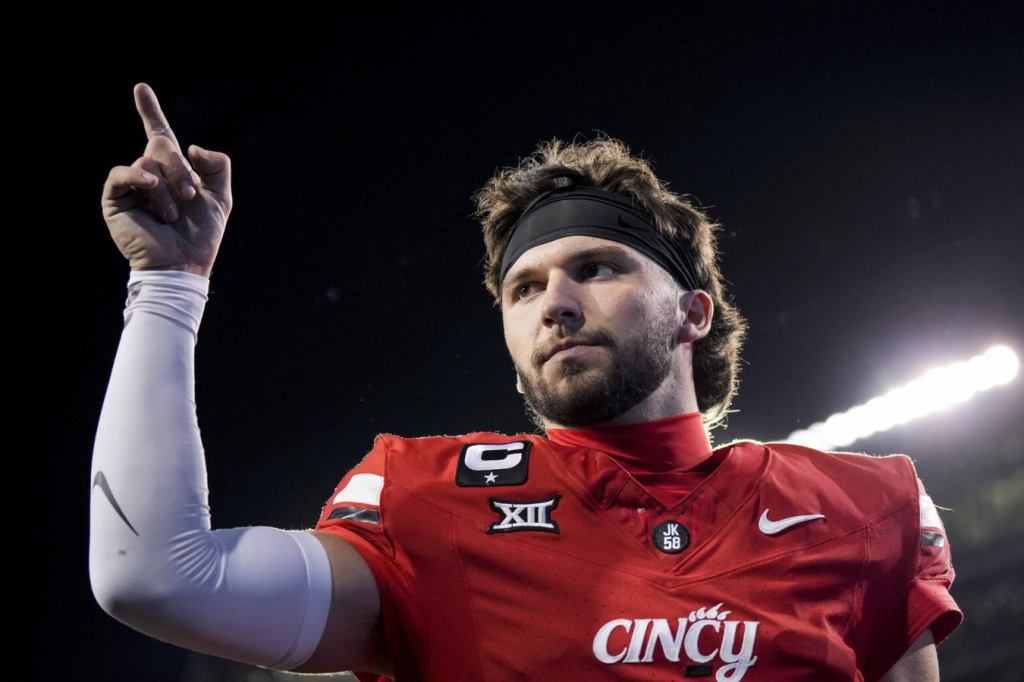
Well…this article wasn’t supposed to be about this.
Originally, I had written and scheduled a piece discussing Brendan Sorsby’s decision to enter the NFL Supplemental Draft and what that meant for both his football future and the ongoing controversy that has surrounded him for months. Then the NFL stepped in and changed the story entirely.
The league announced that it will not hold a Supplemental Draft in 2026. Just like that, the path Sorsby appeared to be pursuing disappeared.
For those unfamiliar with the process, the NFL Supplemental Draft is one of the more unusual mechanisms in professional sports. Unlike the traditional NFL Draft, teams do not simply select players and move on. Instead, organizations submit bids using future draft picks. If a team uses a third-round bid to select a player, it forfeits its third-round selection in the following year’s NFL Draft. A fourth-round bid costs a fourth-round pick, a fifth-round bid costs a fifth-round pick, and so on.
The system is designed to give players who unexpectedly become draft eligible another pathway into the league.
That’s exactly why Sorsby announced his intention to enter.
After months of NCAA investigations, eligibility disputes, court rulings, legal challenges, conference backlash, and endless debate surrounding his gambling case, Sorsby effectively removed himself from the college football conversation by declaring for the Supplemental Draft. Regardless of where you stood on the controversy, it was a significant development. The discussion was no longer about whether he should be allowed to play college football. It was about whether an NFL franchise would be willing to take a chance on him.
In many ways, Sorsby did the right thing.
By declaring for the Supplemental Draft, he removed himself from the center of the NCAA eligibility debate. No more courtroom battles. No more arguments about whether Texas Tech should be allowed to play him. No more uncertainty surrounding the upcoming college football season.
The story was moving from Saturdays to Sundays. Or at least that was the plan.
What makes the NFL’s decision particularly interesting is that the league is not required to hold a Supplemental Draft every year. Under league rules, the NFL evaluates the need for one on a year-to-year basis.
In fact, the last Supplemental Draft was held in 2023, though no players were selected. The last player actually chosen in the event was defensive back Jalen Thompson in 2019, when the Arizona Cardinals used a fifth-round bid to acquire him.
This year’s version appeared likely to revolve around one player: Brendan Sorsby. Then the NFL pulled the plug. According to reports, league officials believed holding a Supplemental Draft would serve as a “distraction” for teams as they prepare for training camp and the upcoming season.
That’s a fascinating explanation.
Because while the NFL never specifically named Sorsby as the reason, it’s difficult not to connect the dots. There simply weren’t other headline-worthy candidates driving interest in a Supplemental Draft this year. Sorsby was the story. Whether the league intended it or not, the decision feels like a statement.
It feels like the NFL looking at the controversy surrounding Sorsby and deciding that it wanted no part of it. That’s a problem for Sorsby, because now he’s stuck in an awkward football limbo.
By declaring for the Supplemental Draft, he already ended his remaining NCAA eligibility. College football is no longer an option. But with no Supplemental Draft taking place, there’s also no direct pathway into the NFL this summer.
That leaves him with three realistic options.
The first is simply preparing for the 2027 NFL Draft. While that’s certainly possible, it comes with obvious concerns. Quarterbacks develop through reps, timing, live competition, and game situations. Spending an entire year away from organized football is rarely ideal for any prospect, especially one already carrying significant baggage.
The second option would be pursuing an opportunity in the Canadian Football League. The CFL season runs through October, meaning Sorsby could potentially spend the remainder of 2026 gaining professional experience, putting positive film on tape, and proving that football—not controversy—defines him.
The third option is the United Football League. While he’d have to wait until the spring of 2027 for that opportunity, the UFL has increasingly become a legitimate proving ground for players seeking another path to the NFL. Success there could potentially reopen doors that currently seem closed.
Personally, I think either the CFL or UFL route makes far more sense than sitting out an entire year. Quarterbacks need to play.
The longer Sorsby remains away from the field, the harder it becomes for NFL teams to separate the player from the controversy. If he’s throwing touchdowns and winning games somewhere, at least evaluators have fresh football reasons to discuss him. If he’s sitting at home training for a year, the gambling story remains the dominant narrative.
And that narrative is already complicated enough.
It’s important to remember that talent was never the issue here. Before everything unfolded, many evaluators believed Sorsby possessed legitimate NFL ability. Some draft analysts even projected him ahead of quarterbacks who eventually heard their names called during the 2026 NFL Draft. Teams reportedly viewed his arm talent, mobility, and upside favorably.
But NFL front offices don’t just evaluate talent. They evaluate risk.
Every organization that considers Sorsby in the future will ask the same questions. Has he learned from this experience? Will gambling continue to be an issue? Will the controversy follow him into the locker room? Will fans, sponsors, and ownership be comfortable with the attention that comes with him?
Fair or not, those questions aren’t going away. And the NFL’s decision to cancel the Supplemental Draft arguably amplifies them.
Maybe the league truly believed holding the draft would be an unnecessary distraction. Maybe this was simply a procedural decision based on the available player pool. But it’s difficult to ignore how this looks from the outside.
The NFL had an opportunity to create a pathway for Brendan Sorsby. Instead, it chose not to. That’s not a formal punishment. It’s not a suspension. It’s not a public condemnation. But it certainly doesn’t feel like an endorsement.
So where does that leave us?
Oddly enough, in a place that feels familiar. The central question surrounding Brendan Sorsby has never really changed. It wasn’t about NCAA eligibility. It wasn’t about Texas Tech. It wasn’t about court rulings.
It’s always been about trust. Can an organization trust him?
College football spent months wrestling with that question. Now the NFL finds itself asking the exact same thing. The difference is that Sorsby no longer has a college football field on which to prove himself. His next opportunity, whenever and wherever it comes, may ultimately determine whether this story becomes one of redemption or one of wasted potential.
Because Brendan Sorsby’s football career isn’t necessarily over. But after the NFL’s latest decision, the road back just got a lot longer.
 Empire Sports Talk
Leave a comment