

With the 2024 NFL season concluding in Super Bowl LIX, it’s time to reflect on the quarterbacks who defined this year and their place in football history. To celebrate the league’s premier passers, we’ve analyzed each starting quarterback, comparing their playstyle, career trajectory, and statistical output to legendary Hall of Fame, future Hall of Fame, or in a few cases, Hall of Very Good quarterbacks.
AFC East
Buffalo Bills – Josh Allen | Comparison: John Elway
Allen’s rare blend of arm strength, mobility, and fearless playmaking closely resembles that of Broncos legend John Elway. Both quarterbacks possess elite improvisational skills, the ability to launch deep passes, and the tendency to deliver clutch performances in big moments. Elway finished his career with 300 TDs and 226 INTs, while Allen is on a similar trajectory, already amassing over 160 TDs before age 30.
Miami Dolphins – Tua Tagovailoa | Comparison: Drew Brees
Tua’s quick release, pinpoint accuracy, and efficiency mirror that of Drew Brees. Like Brees, Tua has had to overcome size-related concerns (both stand under 6’1’’) and early-career injuries. In 2024, he led the league in completion percentage (69.2%), just as Brees did multiple times in his career. Hopefully, Tagovailoa can take care of his health, so that he can have as successful a career Brees did.
New England Patriots – Drake Maye | Comparison: Aaron Rodgers
Drake Maye and Aaron Rodgers share similar physical traits, with Maye standing at 6’4” and 230 lbs—comparable to Rodgers’ 6’2”, 225 lbs. Both possess elite arm strength with the ability to put the ball anywhere on the field. Additionally, Maye’s mobility is a key asset, much like early-career Rodgers, mirroring Rodgers’ ability to extend plays and make throws on the run. – two players who seem to excel after the play breaks down. If Maye refines his decision-making and deep-ball consistency, (and if the Patriots allow him to have a head coach long enough to build around him, the Patriots could have their next franchise QB.
New York Jets – Aaron Rodgers | Comparison: Troy Aikman
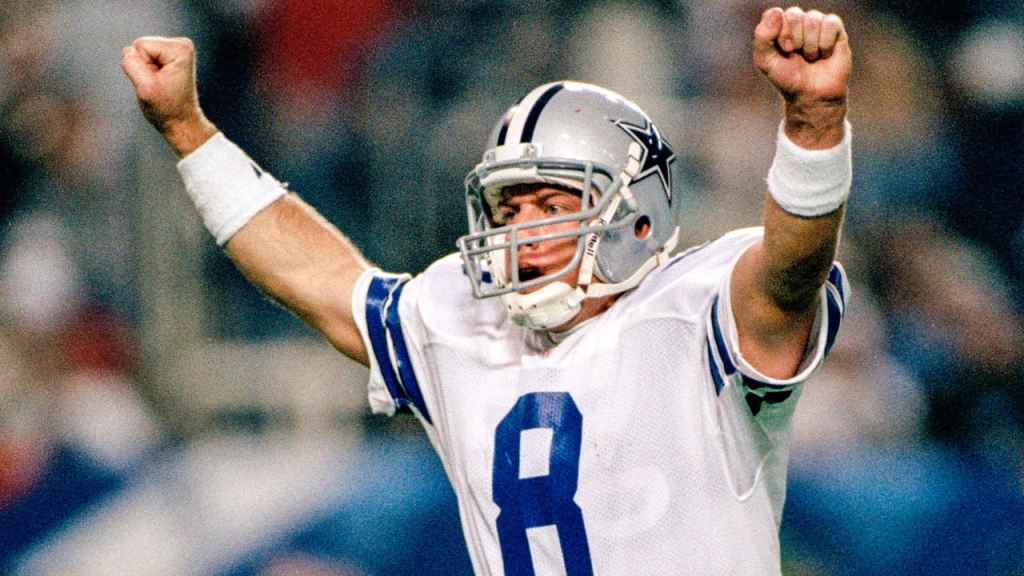
Couple of things: 1) I know it seems strange to do a QB comparison for a 40-year-old, Super Bowl champion who is a sure-fire Hall of Famer, and 2) the Jets have recently expressed their intentions to move on from Rodgers this offseason, but, as I have no interest in creating comparisons for Tyrod Taylor or Jordan Travis (the only two quarterbacks currently on the Jets roster), I’m going with Rodgers. Aikman was known for his pinpoint accuracy and Rodgers has arm strength to put the ball anywhere. I’ve seen Rodgers make throws that I’ve never seen anyone else make. Additionally, neither guy would be traditionally considered mobile quarterbacks in their primes, both Aikman and Rodgers could use their legs to buy time to make the big play.
AFC North
Baltimore Ravens – Lamar Jackson | Comparison: Steve Young
While it seems more obvious to compare Lamar Jackson to someone like Michael Vick, I wanted to go in a more interesting direction. Jackson’s dynamic dual-threat ability, combined with his underrated passing efficiency, makes him a modern-day Steve Young. Like Young, Jackson took over for a Super Bowl- winning quarterback and has improved as a passer over time while maintaining his elite scrambling ability.
Cincinnati Bengals – Joe Burrow | Comparison: Joe Montana
Calm under pressure, elite accuracy, and playoff poise—Burrow’s game is a near-perfect parallel to Montana’s. Burrow already has an AFC Championship and multiple deep playoff runs, much like Montana did early in his career. Unlike Montana, Burrow already has a Super Bowl loss, but with reports that Burrow is interested in reworking his contract to make room to re-sign Chase Higgins and Hendrickson, Burrow’s focus is clearly on getting back to the big game.
Cleveland Browns – Deshaun Watson | Comparison: Dante Culpepper
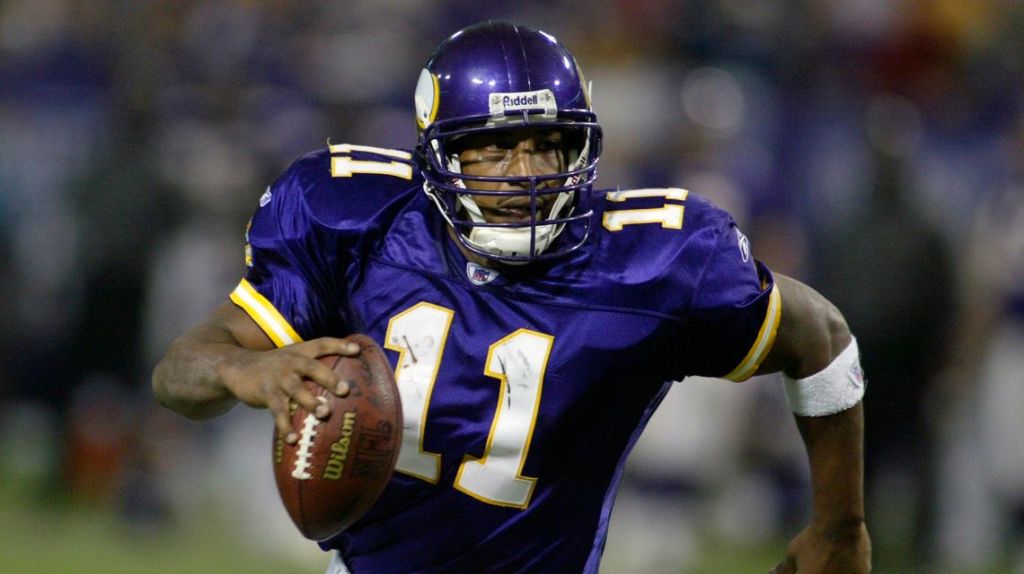
Deshaun Watson and Daunte Culpepper share a similar dual-threat playing style, combining strong arms with the ability to extend plays and pick up yards on the ground. In his best season (2004), Culpepper threw for 4,717 yards, 39 TDs, and 11 INTs, while Watson’s best statistical season (2020) saw him post 4,823 yards, 33 TDs, and 7 INTs—both showing elite efficiency and big-play ability. Both quarterbacks also thrived as rushers, with Culpepper rushing for 609 yards and 10 TDs in 2002, and Watson tallying 551 yards and 5 TDs in 2018. Additionally, both have suffered serious knee injuries that altered their career trajectories, with Culpepper’s torn ACL in 2005 marking a turning point in his decline, and Watson’s injuries impacting his availability and performance in recent seasons. When fully healthy, both QBs showcased a rare blend of arm talent, mobility, and playmaking ability, but later in their careers, both were asked (unsuccessfully) to return to form to save franchises that hadn’t had successful QB play in years.
Pittsburgh Steelers – Russell Wilson | Comparison: Fran Tarkenton
Russell Wilson and Fran Tarkenton share an uncanny ability to extend plays with their legs while still being highly efficient passers. Tarkenton retired as the NFL’s all-time passing leader with 47,003 yards and 342 TDs, while Wilson, through the 2024 season, has amassed over 43,000 passing yards and 332 TDs, putting him on a similar trajectory. Both quarterbacks excelled at making off-script plays, with Wilson rushing for over 5,500 yards and 29 TDs in his career, mirroring Tarkenton’s 3,674 rushing yards and 32 TDs. Their careers are defined by efficiency, leadership, and an ability to keep plays alive, making Wilson the modern-era counterpart to Tarkenton’s legendary improvisational style.
AFC South
Houston Texans – C.J. Stroud | Comparison: Peyton Manning
As much as I hate comparing my childhood idol to a player in the same division where Manning made a name for himself, that’s where I find myself with C.J. Stroud. Stroud’s early efficiency (4,000+ yards, 25+ TDs, 5 INTs) was similar to young Peyton Manning. His elite processing and accuracy give him a chance to follow Manning’s path to greatness. With a serviceable offensive line, Stroud’s ability to find the open receiver mirrors the skill that led to Peyton Manning’s multiple record-setting offensive seasons. Also, like Manning, I definitely see a Lombardi trophy in Stroud’s future.
Indianapolis Colts – Anthony Richardson | Comparison: Cam Newton
A physically gifted QB with rare athleticism, Richardson is built similarly to Newton and brings the same explosive dual-threat ability. Obviously, Richardson didn’t come into the league with the passing ability that Newton did, and I honestly don’t think Richardson will ever reach the MVP or Super Bowl level that Newton did, just by pure size and skill alone, Newton seems like a good comp. If he stays healthy, Richardson could be the next great power-running quarterback.
Jacksonville Jaguars – Trevor Lawrence | Comparison: Andrew Luck
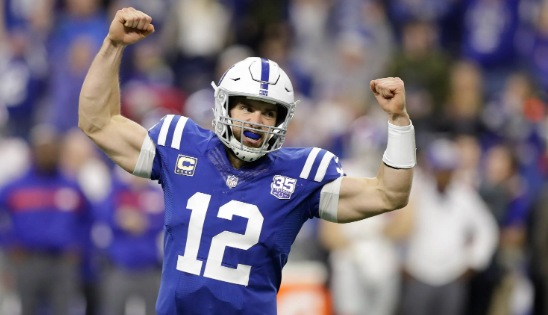
Tall, mobile, and armed with a strong arm, Lawrence’s playstyle and career arc are strikingly similar to Luck’s. Lawrence and Luck were both drafted as franchise quarterbacks for franchise that needed a new North Star. Unfortunately for the Colts, Luck’s premature retirement squashed the hopes of where Luck could take them, and plunged the franchise into a rebuild from which they have yet to emerge. The question for Lawrence is whether he can achieve sustained success that his particular franchise has for him.
Tennessee Titans – Will Levis | Comparison: Jay Cutler
Not much to say here – I don’t have high expectations for Levis and I was never a fan of Jay Cutler, but physically, that’s where I see the comparison. Levis has a cannon for an arm, just like Cutler did. He also shares a boom-or-bust nature with a tendency for dazzling throws and head-scratching mistakes.
AFC West
Denver Broncos – Bo Nix | Comparison: Tony Romo
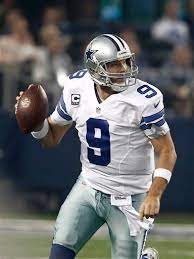
Bo Nix and Tony Romo share a quick release, excellent pocket awareness, and the ability to extend plays with their athleticism. Romo finished his career with a 65.3% completion rate, 34,183 passing yards, and 248 TDs, while Nix showcased similar efficiency at Oregon, completing 74.9% of his passes in 2023 with over 4,500 passing yards and 45 total TDs. Both quarterbacks thrive in quick, rhythm-based offenses and excel at throwing on the run, with Nix displaying Romo-like improvisation when plays break down. While Romo had a reputation for late-game heroics—and occasional heartbreaks—Nix’s ability to stay composed under pressure (as evidenced by Nix’s last second TD in Week 17 to force OT against Cincinnati) could determine if he follows a similar career trajectory in the NFL. I do foresee Nix having greater playoff success than Romo, as he has Sean Payton as a head coach, and more importantly, doesn’t have the added pressure that comes with playing in Dallas.
Kansas City Chiefs – Patrick Mahomes | Comparison: Brett Favre (with Tom Brady’s clutch gene)
Alright, so this make seem like cheating since I chose two quarterbacks, but Mahomes is a unicorn, so it stands to reason that his comp would stand out as well. Coming into the league, Mahomes’ raw arm strength and improvisation were compared to Favre. Over his first seven seasons, Mahomes greatly improved his accuracy to separate himself from Favre’s wild, gunslinging ways. His ability to win and always seemingly make the big play he needs to make have earned him comparisons with Brady. Already a three-time Super Bowl champ, Mahomes forging his own legacy, even entering into the GOAT conversation to some. But considering he’s coming off his second blowout loss in the Super Bowl and his ring count still isn’t halfway to Brady, that converstaion seems a bit premature – though definitely not out of the question in the future if his early trajectory continues.
Las Vegas Raiders – Aidan O’Connell | Comparison: Ryan Fitzpatrick
With Pete Carroll and Chip Kelly taking the reins next season, the Raiders QB situation is up in the air. Vegas has announced their intention to part ways with Gardner Minshew, and it remains to be seen if they’ll go after Shedeur Sanders in the draft or Aaron Rodgers via trade (this move makes sense to me in the short term with a weak 2025 QB draft class), for the sake of this post, we’re going with Aidan O’Connell. Nothing spectacular here. Aidan O’Connell and Ryan Fitzpatrick share a gunslinger mentality, showing fearlessness in pushing the ball downfield despite occasional turnover concerns. Both quarterbacks excel at reading defenses pre-snap and making quick decisions, though O’Connell, like early-career Fitzpatrick, has struggled with turnovers. If he follows a similar path, he could carve out a respectable career as a capable, high-upside starter or valuable veteran backup.
Los Angeles Chargers – Justin Herbert | Comparison: Dan Marino
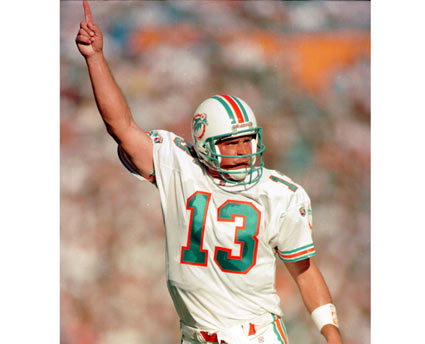
A rocket-armed passer with incredible poise, Herbert’s deep-ball ability and quick release resemble Marino. Herbert came into the league with best-QB-in-the-league expectations but has yet to find playoff success. If the Chargers build a better roster around him (which I believe they can with Jim Harbaugh at the helm) Herbert definitely has the skillset to do what Marino never could: lead his team to a Super Bowl title.
NFC East
Dallas Cowboys – Dak Prescott | Comparison: Donovan McNabb
This one might be one of my favorite comps on this list, because if everything holds as is for Prescott, I think these two players’ legacies would be on the same level. Prescott, like McNabb, has put together an impressive career with great dual-threat ability and a knack for extending plays. While he’s yet to reach a Super Bowl, both QBs have multiple playoff appearances and have faced similar criticism for coming up short in big moments. It could be difficult while playing under Jerry Jones in the media tornado that is Dallas, but if Prescott can do what McNabb never could, Prescott would immediately enter a different tier of QB than McNabb.
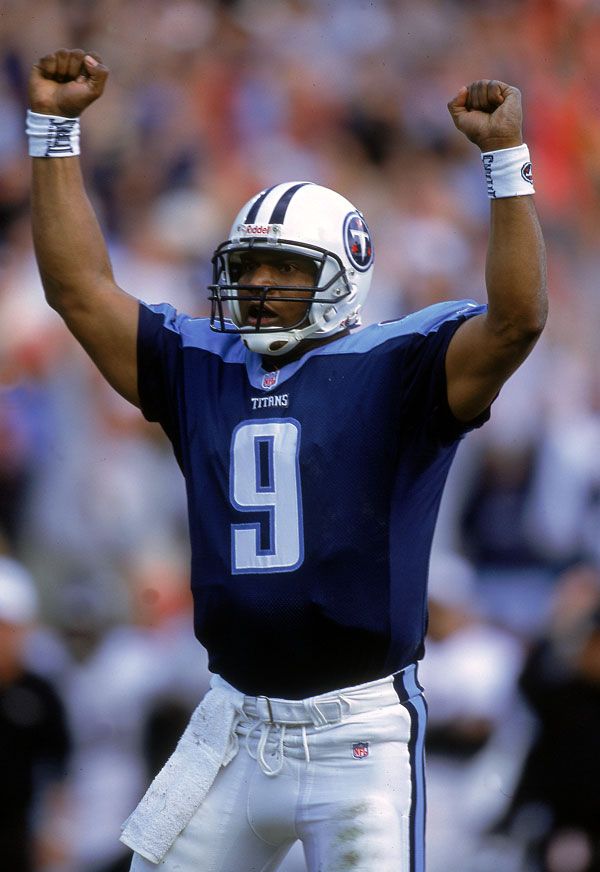
Philadelphia Eagles – Jalen Hurts | Comparison: Steve McNair
Hurts and McNair share a similar toughness, leadership style, and ability to hurt defenses through the air and on the ground. Both have been MVP finalists and excel at reading defenses in run-pass-option (RPO) systems. McNair quarterbacked an offense that heavily featured Pro Bowl running back Eddie George to within two yards of a Suber Bowl victory against the “Greatest Show on Turf”. Hurts had Pro Bowler and MVP-candidate Saquon Barkley and led the Eagles to a Super Bowl victory against the superpowered Chiefs, spoiling their quests for a historic three-peat. A lot of similarities to like.
New York Giants – Drew Lock | Comparison: Case Keenum
Similarly to the Raiders, the Giants’ QB situation is in shambles. Since shipping Daniel Jones out of town, they are desperately looking for their next franchise guy. For now, we’ll focus on Drew Lock. Lock and Case Keenum both entered the NFL as mid-round picks and have carved out careers as serviceable quarterbacks with flashes of brilliance. Keenum’s best season came in 2017 with the Vikings, when he posted 3,547 passing yards, 22 touchdowns, 7 interceptions, and a 67.6% completion rate, leading Minnesota to the NFC Championship Game. Lock, meanwhile, has shown a strong arm but struggled with consistency, with his best season (2020) featuring 2,933 yards, 16 touchdowns, and 15 interceptions with a 57.3% completion rate. Both quarterbacks thrive in aggressive downfield passing but have struggled with turnovers and decision-making under pressure. If Lock can refine his game, he could follow Keenum’s path as a dependable spot starter or high-end backup.
Washington Commanders – Jayden Daniels | Comparison: Lamar Jackson (early years)
Going a different route here, I’ll be comparing to a current quarterback in his prime. Daniels entered the league as an explosive dual-threat quarterback with elite speed and decision-making in the run game. Much like Lamar Jackson’s early years, Daniels will likely lean on his athleticism while developing his passing consistency. With Daniels, I was very impressed with his poise in big moments as a rookie, and much like Lamar Jackson, who has already brought home multiple MVPs, I believe Daniels’ future is extremely bright.
NFC North
Detroit Lions – Jared Goff | Comparison: Kurt Warner
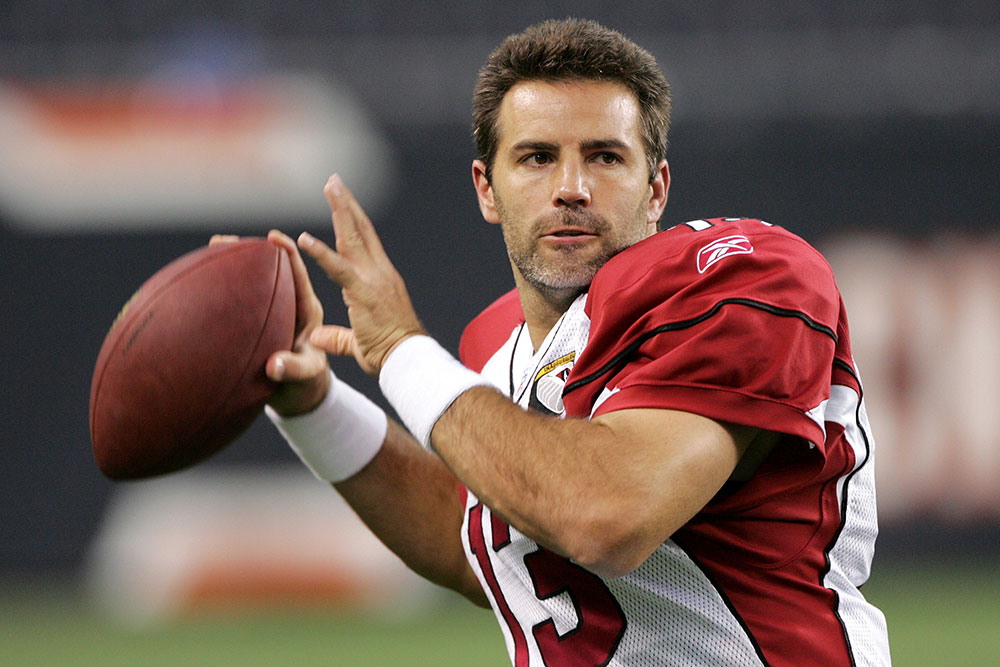
Goff’s resurgence in Detroit mirrors Warner’s revival with the Cardinals. Both are accurate pocket passers with high football IQs, and when given a strong supporting cast, they can put up elite numbers. Warner’s career was the ultimate underdog story, and he managed to play in two Super Bowls and take home Super Bowl XXIV MVP honors. Goff has already played in the big game, coming up short against Tom Brady and the Patriots, but with Dan Campbell as his coach and these weapons around him, I don’t see why he won’t eventually get his ring, equaling him with Warner.
Green Bay Packers – Jordan Love | Comparison: Brett Favre
Here’s another situation where we’re using a comp with a current quarterback. The natural comparison here is Aaron Rodgers, who Love sat behind for three seasons. Love’s arm talent and ability to extend plays are eerily similar to Rodgers’ early-career growth, and 2024 proved he can be a long-term answer. Obviously, Love is more mobile than Rodgers has ever been, but he’s also a bit more turnover prone (at least in 2024) than Aaron usually was, so it evens out. With the big money that the Packers have committed to Love, they are committed to his growth. The good news is, the Packers have had the good fortune of being a franchise-QB factory, having 3 signal callers (Favre, Rodgers Love) for the last 33 years.
Chicago Bears – Caleb Williams | Comparison: Patrick Mahomes
Williams’ improvisational ability, arm angles, and deep-ball accuracy are reminiscent of Mahomes. While he has a long way to go, his ability to make something out of nothing is elite. Even with dysfunction in Chicago’s front office, Williams showed good improvement from the beginning of the season to the end. Luckily for the Bears, Ben Johnson looks like he could be the next hotshot head coach, and that could benefit Williams well. Similarly to the way that Jim Harbaugh resurrected Alex Smith’s career, hopefully Johnson’s offensive prowess can help Williams progress to show the shades of Mahomes everyone sees in him.
Minnesota Vikings – J.J. McCarthy | Comparison: Eli Manning
The Vikings have an interesting decision to make. They have three starting QBs on their roster. They drafted J.J. McCarthy to be the future, but after his injury no one expected Sam Darnold to perform as well as he did. Now there’s Daniel Jones. Since, at last report, it seems like the Vikings are more willing to let Darnold walk than they are to franchise tag him, for the sake of this post, we’ll proceed with J.J. McCarthy. McCarthy enters his first healthy season in the NFL as a poised, intelligent QB who thrives under pressure—just like Eli Manning. While he may not have elite traits, his ability to perform in big moments could define his career. Thanks to his time at Michigan with Jim Harbaugh, McCarthy is a winner, and with Kevin O’Connell and the weapons that Minnesota has, it wouldn’t surprise me if he found similar career success as Manning.
NFC South
Tampa Bay Buccaneers – Baker Mayfield | Comparison: Jeff Garcia
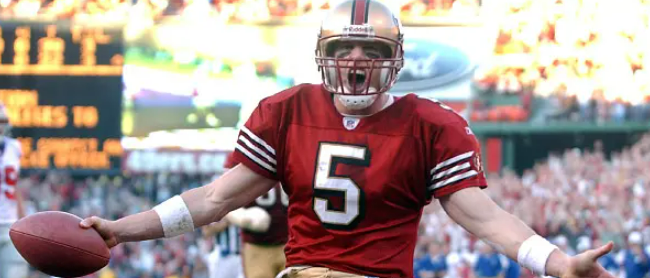
Baker Mayfield and Jeff Garcia share similar traits as gritty, undersized quarterbacks who play with a chip on their shoulder and thrive in off-script situations. Garcia’s best NFL season came in 2000 with the 49ers, when he threw for 4,278 yards, 31 touchdowns, and 10 interceptions with a 63.3% completion rate. Mayfield, in comparison, had his most efficient season in 2020, posting 3,563 yards, 26 touchdowns, and 8 interceptions while leading the Browns to their first playoff win in decades. Both QBs have demonstrated above-average mobility, with Garcia rushing for 2,140 career yards and Mayfield showing similar escapability despite a lesser rushing output. While Garcia’s longevity and three Pro Bowl appearances stand out, Mayfield still has time to match his career trajectory.
New Orleans Saints – Derek Carr | Comparison: Matt Ryan
Derek Carr and Matt Ryan are both prototypical pocket passers known for their durability, accuracy, and leadership. Ryan’s 2016 MVP season saw him throw for 4,944 yards, 38 touchdowns, and just 7 interceptions, while Carr’s best statistical season in 2021 featured 4,804 yards, 23 touchdowns, and 14 interceptions. Both quarterbacks have posted similar career completion percentages—Ryan at 65.6% and Carr at 65.5%—highlighting their efficiency as passers. While Ryan had a higher peak, leading the Falcons to a Super Bowl, Carr has consistently put up strong numbers despite a revolving door of head coaches and offensive coordinators. If Carr can find stability and success late in his career, he may yet mirror Ryan’s longevity and impact.
Atlanta Falcons – Kirk Cousins | Comparison: Philip Rivers
Cousins’ move to Atlanta gives him a fresh start, but his gunslinger mentality and statistical consistency mirror Rivers. Both put up big regular season numbers but often fell short in key playoff moments. But with the increased likelihood that Atlanta will move forward with Michael Penix Jr., we could potentially see Cousins fill in as a gap-year starter for a QB-needy team the way that Rivers did in Indianapolis.
Carolina Panthers – Bryce Young | Comparison: Doug Flutie
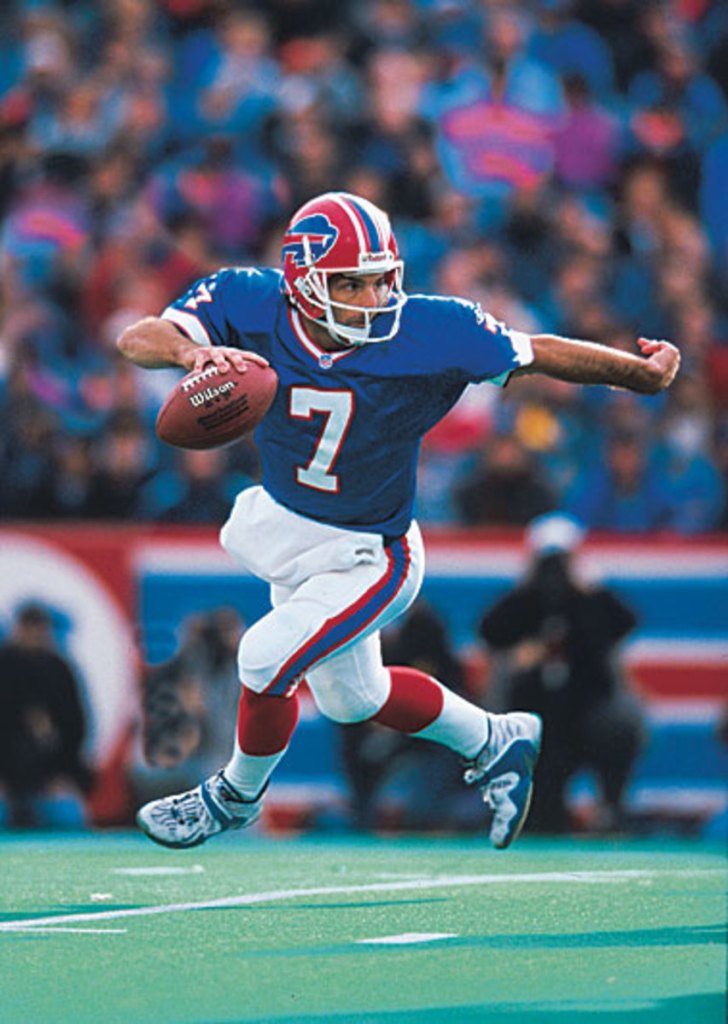
I find this to be a fun comparison: Bryce Young and Doug Flutie share similar traits as undersized but highly skilled quarterbacks who rely on their mobility, accuracy, and playmaking ability. Flutie, standing at 5’10”, faced doubts about his size throughout his career, much like the 5’10” Young, who was the first overall pick in 2023 despite concerns about his frame. Flutie’s best NFL season came in 1998, when he threw for 2,711 yards, 20 touchdowns and 11 interceptions, numbers that are comparable to Young’s rookie struggles in 2023 (2,877 yards, 11 touchdowns, 10 interceptions). Both quarterbacks have demonstrated poise under pressure and carved out exceptional college careers, but Young will need to develop further to achieve the longevity and late-career success that Flutie found in both the NFL and CFL. The Panthers are currently a mess due to horrendous ownership, but if Young can overcome his early struggles, he has the talent to carve out a career beyond just being a size-based anomaly.
NFC West
San Francisco 49ers – Brock Purdy | Comparison: Joe Theismann
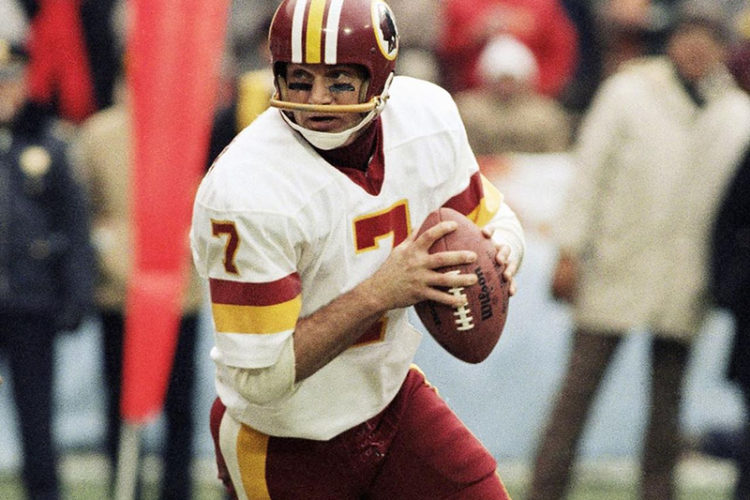
Purdy’s efficiency and ability to win in a structured system like Kyle Shanahan’s resemble Theismann’s prime years in Washington. He’s not the most physically gifted, but his calm under pressure and ability to win make this a fair comparison. Theismann led the Washington Redskins to a title in Super Bowl XVII in 1982, but his best individual season came in 1983 when he threw for 3,714 yards, 29 touchdowns and 11 interceptions, taking home both Offensive Player of the Year and MVP honors. Purdy went from the NFL Draft’s “Mr. Irrelevant” to starting in the Super Bowl in just two seasons. Pretty relevant if you ask me.
Seattle Seahawks – Geno Smith | Comparison: Rich Gannon
Geno Smith and Rich Gannon share a unique career arc as late bloomers who found success after years of being overlooked. Gannon didn’t become a full-time starter until his 30s, much like Smith, who revitalized his career with the Seahawks after years as a backup. In 2022, Smith led the NFL in completion percentage (69.8%), mirroring Gannon’s efficiency during his 2001 MVP season (67.6% completion, 4,689 yards, 26 TDs, 10 INTs). Both quarterbacks thrive on accuracy, smart decision-making, and mobility, though neither possesses elite arm strength. If Smith can sustain his recent success, he could follow a Gannon-like trajectory and remain a quality starter well into his mid-to-late 30s. Plus, let’s not forget that Gannon’s career culminated in a trip to Super Bowl XXXVII against Tampa Bay.
Los Angeles Rams – Matthew Stafford | Comparison: Ben Roethlisberger
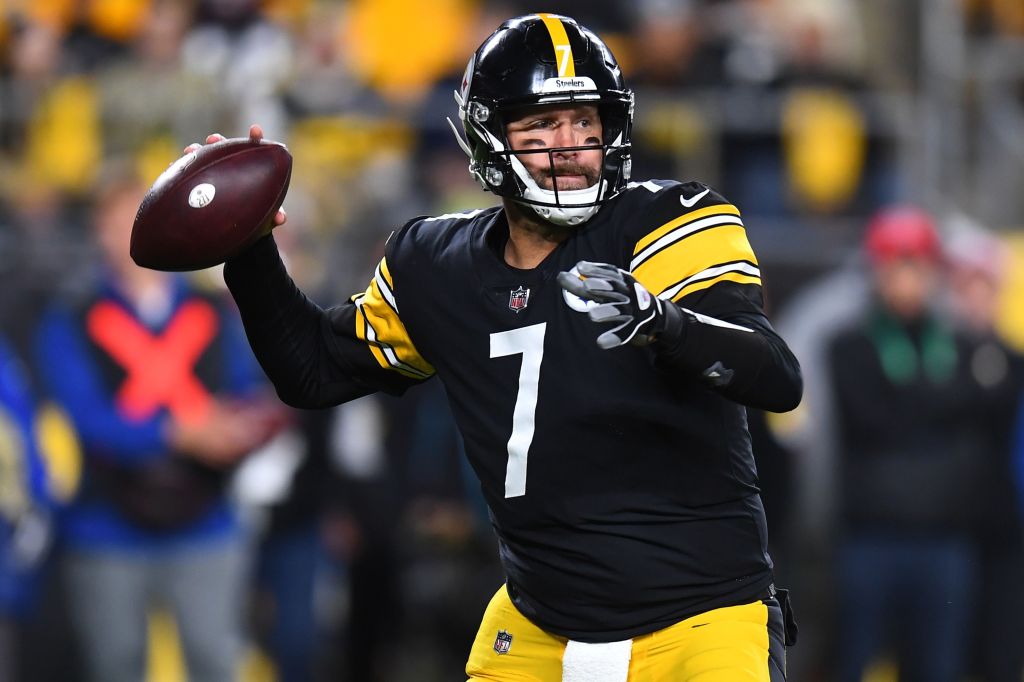
Matthew Stafford and Ben Roethlisberger share similar career trajectories as big-armed, tough quarterbacks who thrived in high-volume passing offenses. Both rank among the top 10 all-time in passing yards, with Roethlisberger finishing with 64,088 yards, while Stafford is on pace to surpass 60,000 yards soon. Roethlisberger, however, had more postseason success, winning two Super Bowls and posting a 13-10 playoff record, while Stafford, despite a Super Bowl LVI victory, has a more limited playoff résumé (5-4 record). Statistically, both hovered around a 64% career completion rate, though Stafford has typically been asked to carry a heavier load, evidenced by his higher career passing attempts per game (35.5 vs. 32.5). While Roethlisberger had the edge in mobility and escapability, Stafford’s arm talent and ability to deliver in clutch moments make him one of the best pure passers of his era.
Arizona Cardinals – Kyler Murray | Comparison: Russell Wilson (Seahawks era)
Kyler Murray and Seahawks-era Russell Wilson share striking similarities as dual-threat quarterbacks with the ability to extend plays and deliver deep, accurate passes. Wilson, during his time in Seattle, maintained a high efficiency as a passer. Both quarterbacks have been dangerous runners, with Wilson averaging roughly 500 rushing yards per season in his prime, while Murray, when healthy, has surpassed 500+ rushing yards multiple times. Wilson, however, had a stronger knack for game-winning drives and clutch performances, leading 21 fourth-quarter comebacks in his first five seasons, whereas Murray is still developing in that area. While Murray’s early career mirrors Wilson’s in play style, he’ll need more postseason success to truly match what Wilson achieved in Seattle.
Conclusion
While every quarterback’s career path is unique, historical comparisons help frame their potential. As the 2024 season wraps up with a new champion in Super Bowl LIX, fans can appreciate today’s stars while drawing parallels to the legends of the past. Will some of these QBs carve out Hall of Fame careers of their own? Time will tell.
 Empire Sports Talk
Leave a comment