

The WNBA is in the midst of its MJ era – thanks to rookie sensation Caitlin Clark. And before you jump ahead of me, I’m not saying that Caitlin Clark is the GOAT, or that she even will be by the time her career is done. What I am saying is that Caitlin Clark is doing for the NBA what Jordan did for the NBA. Let me explain:

Michael Jordan will forever be not only one of the most influential players in NBA history, but also one of the most influential athletes of all=time, and only a portion of that is due to his Hall-of-Fame on court performances. When Michael Jordan came into the NBA in 1984, the league was far from the multi-billion-dollar entertainment behemoth it is today. For instance, the NBA Finals weren’t broadcasted as a live sporting event until 1982 (from 1979-1981, the NBA Finals were broadcasted on a tape delay, and wouldn’t begin until after the local news at 11:30 PM).
Larry Bird and Magic Johnson are often credited with saving the NBA – more on that shortly – but Michael Jordan was the catalyst of the NBA’s global growth and pop culture relevance. As Michael Jordan’s popularity rose, he wasn’t just the face of the league, he had become a global phenomenon – movies, commercials, endorsement deals, etc.

Over the course of Jordan’s career, the NBA’s popularity skyrocketed. Fans regularly travelled across the country just to see Jordan and the Bulls play. Then, there was his influence on the NBA fashion culture. Michael wanted to sign with adidas, but Nike pursued him hard. They saw his potential and promised him his own shoe line. This was a risk at the time, because Nike was known mostly as the footwear of tennis players and were hardly worn in the NBA at all. But eventually, Nike won MJ over and the ‘Air Jordan 1’ sneakers were released April 1, 1985. To this day, the Air Jordan one is considered one of the most iconic sneakers in the world.
With the release of the Air Jordan 1, Nike’s marketing message was simple: “If you want to play like Mike, you must buy his sneakers.” “Be Like Mike” became the unofficial slogan of the 90s, crossing over to brands like Hanes, Coca-Cola, Wheaties, Gatorade and McDonald’s.
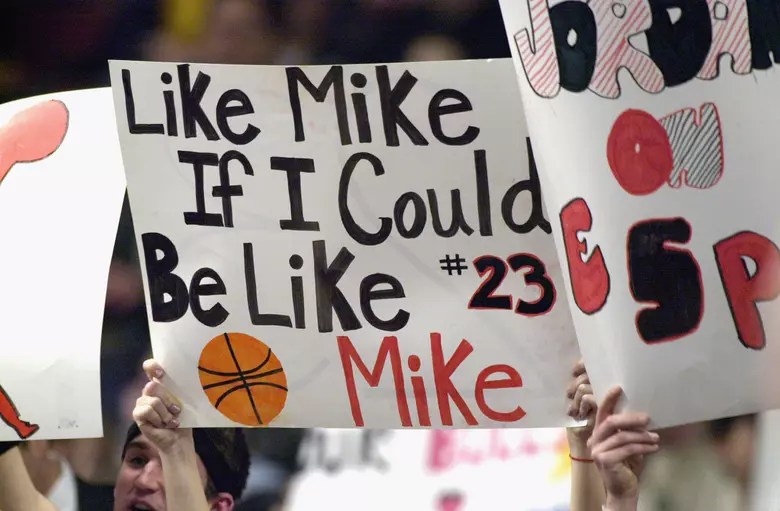
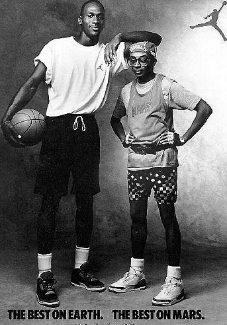
The success of the shoes catapulted Nike to the forefront of the shoe game, and sneakers became a fashion statement beyond basketball. They became engrained in pop culture, hip-hop culture, and a large reason why the NBA is so intertwined with fashion today. One man not only changed basketball, but his marketability changed entire industries. Companies learned of the power that athlete endorsements could have. In a way, that all started with Michael.
But this isn’t a post about the marketability of Michael Jordan. It’s a post about Caitlin Clark. I just used Michael Jordan as an example of who the NBA once was much more insular, and the sheer influence of one superstar at a time when the league was hungry for one could have a profound impact on growth. Enter Caitlin Clark.
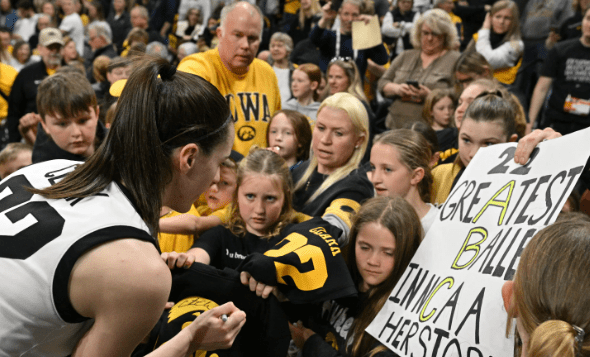
The WNBA, at 28 years old, is still relatively young compared to its counterpart which is 50 years its senior. The league has had its struggles to find a consistent audience in its existence, and as a result, has struggled as a financial entity. The WNBA relies on the NBA for some of its funding, and only recently began league-wide charter flights for its players. In its previous 27 seasons, the WNBA has definitely had its share of star players – Lisa Leslie, Tamika Catchings, Diana Turasi, Candace Parker and Sue Bird to name a few – but none that have been as intensely marketable as Caitlin Clark. Ever since she took the world by storm at the University of Iowa, the world has been encapsulated with Clark. This is where I draw a line to the growth that came with MJ in the NBA.
The growth of the W has been a slow climb in the last couple of years thanks to a new crop of great players like A’ja Wilson, Kelsey Plum, Breanna Stewart and Sabrina Ionescu, but the latest jump has been monumental thanks to Clark. Let’s start with night one: when the Indiana Fever selected Clark with the first overall pick in the 2024 WNBA Draft, 2.45 million people tuned in to hear her name called. That’s four times the previous record, and a 328% percent increase from the 2023 Draft.
People tune in to watch Caitlin Clark. Her WNBA debut on May 14, which aired on ESPN, drew 2.1 million viewers, making it the most-watched WNBA game in 23 years, and the most-watched WNBA broadcast ever in the history of the network. Similarly, the 1.7 million who tuned in to for her first ABC-broadcasted game was also an all-time WNBA record for that network.
Not only are people tuning in for Clark; they’re showing up for her too. The Indiana Fever are tops in average attendance for any WNBA – and by a wide margin. The Fever are playing in front of an average crowd of 16,898 at home, roughly 4,100 more than the average attendance of the next closest team. That trend continues when the Fever leave Gainbridge Fieldhouse, averaging nearly 5,000 more in attendance during road games. In addition, the Fever’s July 2nd game against the Las Vegas Aces was moved to T-Mobile Arena to accommodate a larger crowd. The Fever and Aces squared off in front of a crowd of 20,366 – the fifth-largest regular season crowd in WNBA history, a crowd that would’ve far-exceeded the 12,000-seat capacity of Vegas’ Michelob Ultra Arena.
Before you can turn a profit, you must bring in revenue, and revenue comes from ticket sales and merchandise. WNBA merchandise sales are up 500% this season, and to no one’s surprise, Clark has the number one selling jersey in the league. But the biggest way that the WNBA can increase revenue comes from TV, and while we’ve already seen how her early season appearances set records for networks, 36 of the 40 Indiana Fever games will be televised.
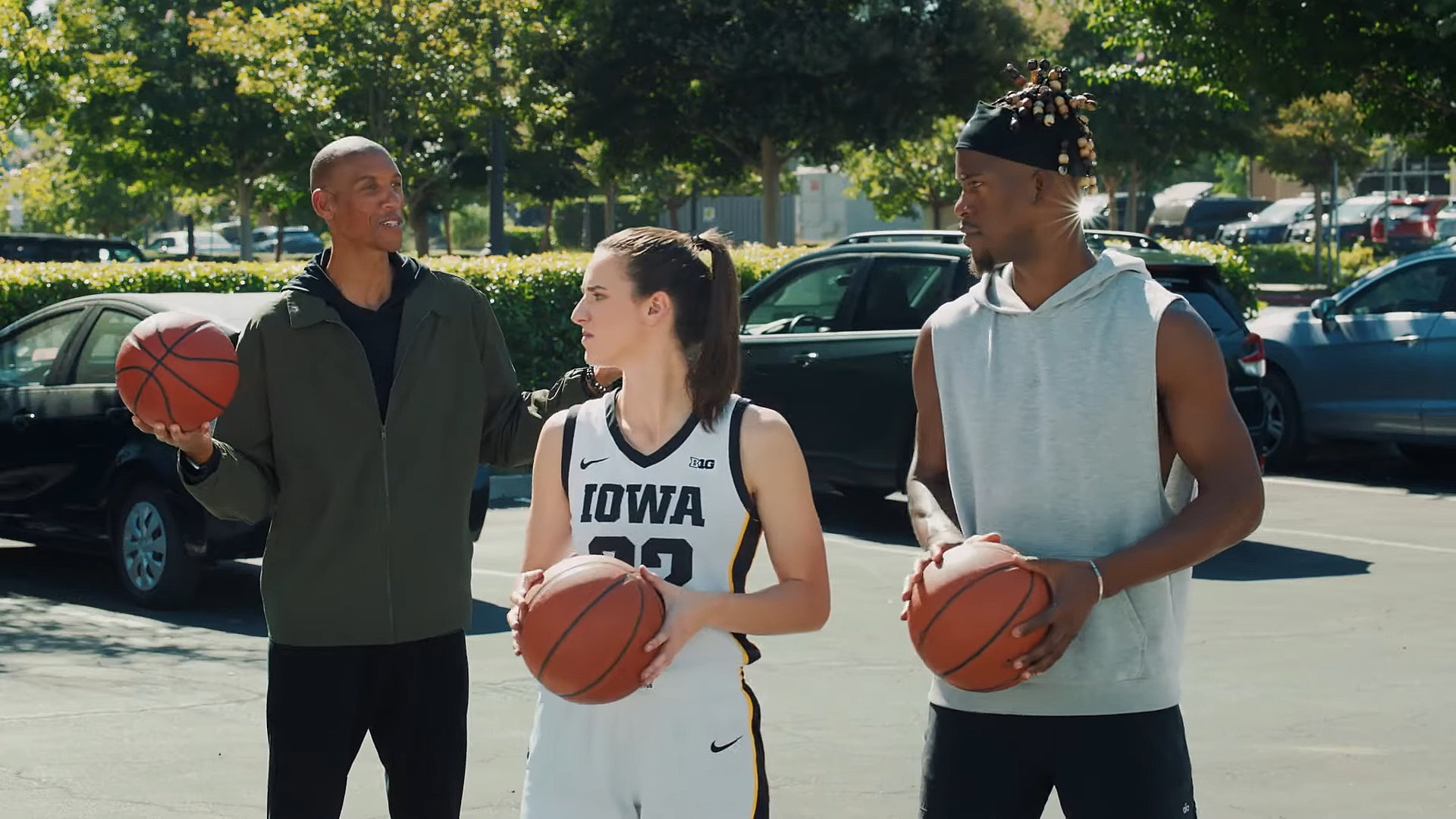
One of the main issues the WNBA still faces is low pay. Caitlin Clark’s league salary is $76,535. Jackie Young of the 2-time defending champion Las Vegas Aces is the league highest-paid player at $252,450. In comparison, Steph Curry, the NBA’s highest-paid player, earned $51.9 million for the 2023-24 season, which is more than half of the entire WNBA’s revenue. The low pay is largely due to low TV ratings, but according to an article in the Indianapolis Star, that’s “likely to change that calculation significantly.” Clark is “that rare athlete whose advertisements will cross over into other sports.” Sound familiar? That’s what companies realized about Michael Jordan right before the NBA’s popularity exploded!
Point is the WNBA is having a Michael Jordan moment in the form of Caitlin Clark – a single player that is dramatically altering the popularity of a growing league just by showing up.
Just as a quick aside, I understand that this isn’t all because of Caitlin Clark. The league was already ascending, just as there were other great players alongside MJ – he was just the one that captured everyone’s attention. One of the other WNBA rookies that can’t be ignored is Angel Reese.
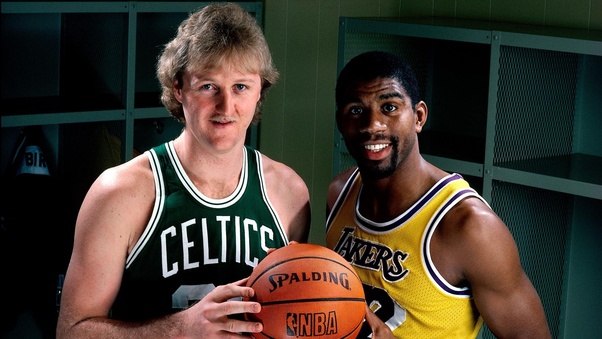
The WNBA may very well be mirroring the NBA’s two most significant growth periods simultaneously. Yes, Clark may give the league its MJ-like figure, but her rivalry with Angel Resse mirrors that of Larry Bird and Magic Johnson in the 70s and 80s: the rivalry that likely saved the NBA. Before they even reached the Association, Magic and Bird faced off in the 1979 NCAA Tournament Championship Game with Magic’s Michigan State Spartans defeating Bird’s Indiana State Sycamores 75-64. That title game was a turning point for the NCAA Tournament, which is now one of the most exciting sporting events of the calendar year. After they were done saving NCAA basketball, Magic and Bird continued their trailblazing ways in the NBA, and with two of the league’s most historic franchises no less. Magic’s Lakers and Bird’s Celtics faced off in the NBA Finals three times in the ’80s, with Bird getting his revenge for the college title game in 1984, but Magic getting the last laugh in both ’85 and ’87.
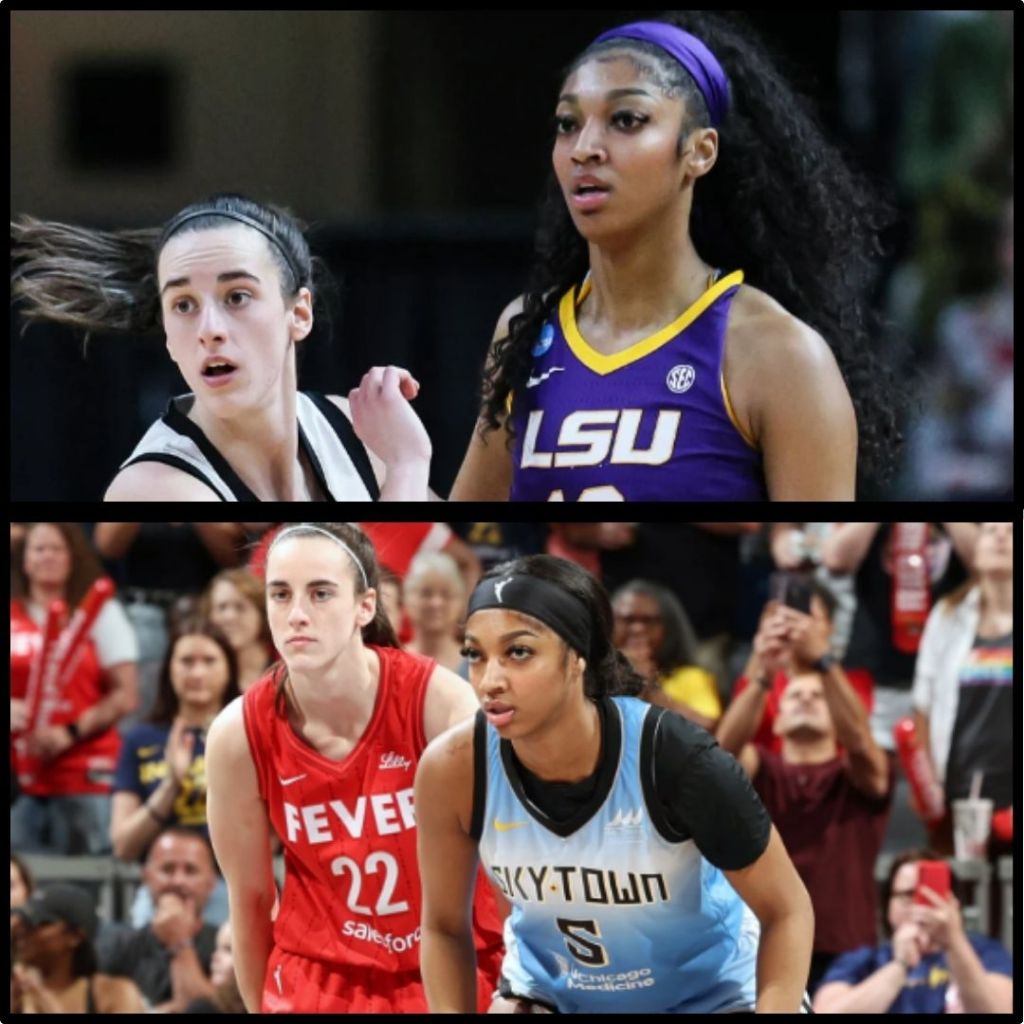
Bird and Magic were bitter rivals in a league that desperately needed star power. In 1980, the NBA was struggling for an identity, and the Magic-Bird rivalry breathed some much-needed life into the league. So far, the ever-colliding paths of Caitlin Clark and Angel Reese seem to be following the Magic-Bird blueprint pretty closely. College rivals who increased the popularity of the college tournament (this year’s women’s tournament was the most-watched ever), turned professional rivals whose head-to-head matchups bring significant attention. And remember when I said that Clark was number one in WNBA jersey sales? Any guesses as to who number two might be? That’s right, it’s Reese.
Am I saying that that Caitlin Clark is destined to have a career equivalent to Air Jordan? Am I directly comparing Angel Reese the player to Magic or Larry Bird? Not at all. This is about marketability and growth. What’s next for the WNBA? Is an exponential leap into the stratosphere of pop culture phenomena on the horizon. Time will tell…
 Empire Sports Talk
Leave a comment